
Explosion-proof and industrial-grade luminaires engineered to illuminate vessel interiors, reactors, tanks, and pipelines. ATEX-certified solutions delivering optimal visibility in hazardous and demanding process environments.
Process vessel lighting systems are essential safety components that enable operators to visually monitor reactions, verify product quality, inspect equipment cleanliness, and confirm process stages—all without compromising the sealed integrity of pressurized equipment.
Our comprehensive lighting portfolio serves industries where visual access to vessel interiors is critical but environmental conditions are hostile. From pharmaceutical bioreactors requiring sterile illumination to petrochemical vessels in ATEX Zone 1 hazardous areas, we provide certified lighting solutions engineered for reliability, safety, and operational longevity.
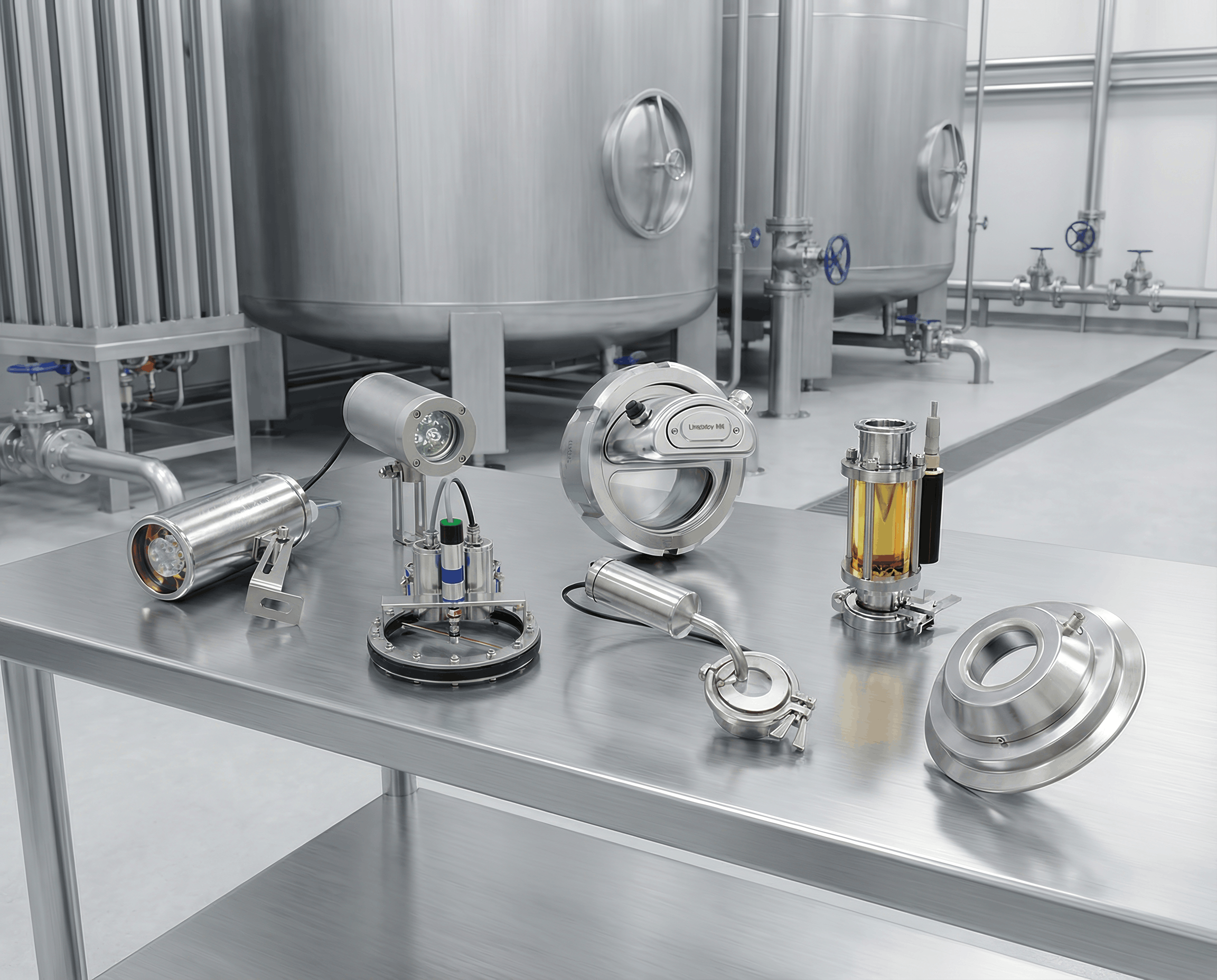
From industrial-grade LED systems to explosion-proof halogen luminaires for the most demanding applications.
Energy-efficient LED lighting systems offering superior brightness, extended operational life, and reduced power consumption for continuous process monitoring.
Certified luminaires for hazardous area illumination where flammable gases, vapors, or combustible dust create ignition risks.
Traditional incandescent technology providing proven reliability and broad spectrum illumination for general-purpose applications.
Pharmaceutical-grade lighting with electropolished surfaces and tri-clamp mounting for sterile process observation.
Integrated assemblies combining observation windows with dedicated lighting in single-port configurations for space-constrained vessels.
Remote light source transmission through flexible or rigid fiber optic cables for ultra-compact port installations.
Understanding the performance characteristics, operational costs, and application suitability of each lighting technology.
Comprehensive performance parameters for application engineering and compliance verification.
Five critical factors for specifying optimal vessel illumination systems.
Identify the ATEX zone classification of the installation environment. Zone 1 and 21 require Ex d (flameproof) certified luminaires. Non-hazardous areas allow industrial-grade IP66/67 lights without explosion-proof certification.
Select technology based on operating duration, energy costs, and maintenance accessibility. LED lights excel in continuous operation with 10x longer lifespan and 75% lower energy consumption. Halogen offers lower upfront cost and proven reliability for intermittent use.
Determine mounting arrangement based on vessel design. Dedicated light ports allow direct mounting. Sight glass combo units integrate illumination with observation windows. Bracket mounts position lights over existing sight ports.
Match luminaire voltage specification to available power infrastructure. European installations typically use 230V AC. Intrinsically safe applications may require 24V DC. Low-voltage (12V) options available for mobile vessels.
Pharmaceutical and food processing require sanitary-grade luminaires with electropolished surfaces and FDA-compliant materials. Corrosive environments necessitate 316 stainless steel housings. High-temperature service demands heat-resistant enclosures.
Our technical specialists provide application-specific light selection, ATEX zone classification verification, and lumen requirement calculations for optimal vessel illumination.